|
|
Reese Roper: Sadly, that rumor was started by me. I was struck one day while watching The Wizard of Oz - by the similarities to it, and the Biblical story of the Prodigal Son. I thought it would be awesome to fill the album with allusions to that movie, as a metaphor for the crew of the Gloria finally coming home after being lost for so long. I pitched the idea to the other guys, who thought it was corny, and that it would be better to have the album be about the letdown of being home, more than the trip home. So we compromised, and made it a little of both, but threw out the Wizard of Oz parts. The only snippet that survived is one line in "Mercenary": "pull the curtain back and see what dies, emerald spires of the near profound, let's burn this lousy city down".
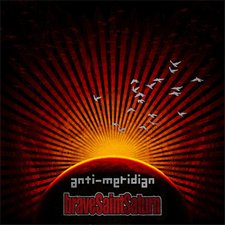
Reese: I started writing for it in February of 2004, after Leanor and I got back from doing a poetry tour with Pigeon John, Mark Solomon, and our friend Alan "the Fisherman." This was right after Five Iron broke up. A local church let me use a room in their basement to write stuff in, so I would go there everyday and write until it got too cold for my fingers to work for the guitar playing. I had just broken up with my second fiance, so the earlier songs were almost too dark to go on a Brave Saint album. Good times.
Reese: The first song was one called "Homesick," one that was eventually cut. Actually, the first three or four were cut. The first one that made it from that period of writing in the freezing church basement was "Always Just Beneath The Dawn." Originally, it was called "Five Golden Rings," and then "Father's Day."
Reese: Haha, I wish I could tell you that it was, and sound really smart and well put together. The fact that we were able to record in the first place was a fluke. In the beginning, the idea was just to use the idea of a space mission as a metaphor for what life was like at the time. The response was so great to it that we decided to flesh it out into something like a three-act play about them getting lost, and then being saved. If we are able to do another trilogy, it will be with a much more thorough design.
Reese: Do you mean the name for the ship, or the story? I guess I did, for both. The idea was to try and tell the story with songs that could stand alone, without seeming so much like a concept album. So, to make it seem more fluid in terms of the plot we tried to integrate words from songs, or names of songs into the story, as well as trying to repeat phrases and words throughout the entirety of it. There is an ELO cover at the beginning and the ending of the trilogy, references to Dylan Thomas' poems in the lyrics and actual readings of the poems, repetition of themes like angels, birds, and ghosts, and then there is the whole prologue/spoken word portion, which serves as a sort of narration for the piece as a whole.
Reese: Yeah, it really is difficult; but, there is a possibility for both. A big part of why I started nursing school was to have a good job that would allow me to have four days off a week to be able to write music/run a label. I will probably go back to school in a few years to become a Nurse Anesthetist, but for now, that is the plan. If this album does well, we are discussing another trilogy. We are also talking about playing some festivals this summer. We'll see...
Reese: Gosh, I never heard any of those. Well, I definitely would not be opposed to it, or even recording another Roper album, just because it was the most fun I have ever had in a band. The only problem that I can see with what I just said, is that Roper really didn't do very well with touring and album sales, and the actual organization of the band was disastrous. I really just wish we could just start that whole thing over, and step number one would be not naming it "Roper". The whole thing was put together by 5minutewalk, our record label, who I let have almost complete control because I thought it would cause them to work harder towards the band's success. It didn't work that way, and after many misunderstandings, I ended up in the middle of a tour with no label support, a bunch of my friends who I asked to be in the band- but couldn't pay them what they were promised, an album that they didn't help with, and a ton of debt.
Reese: I can tell you that I should be working on it right now, instead of watching The Daily Show. Right now, we are still hoping to have it out by Christmas as a joint release from Asian Man and Department of Biophysics. It is in a very rough state though. We want to have a 2-hour feature about the history of Five Iron, with a ton of bonus footage like: short films, videos (new ones even!), etc. It has just taken so long to compile all of the footage, and import it all onto a hard drive for editing. Keep your fingers crossed.
Reese: Let's see... Masaki, Keith, Dennis, Andy, Me, Jonathan Byrnside, Sam Hernandez, Micah Ortega, a guy that helps Saki in the studio, and my wife. Not to mention all the people I asked for input. I think it ended up being a lot less people than the other albums because most of it was recorded in my basement.
Reese: Wanted to, and did. There is an XBOX 360 in my studio, that I tell people is to help me deal with writer's block, but is actually probably the cause of that writer's block. Don't tell my wife. Usually, though, working on the album was procrastination for not reading my nursing textbooks, or learning about Advanced Obstetrics and Child Care. Yuck.
Reese: I do not watch as many as I used to. I still think that The Simpsons might be the best television show ever made, but I haven't really watched much TV lately because of school. Oh, the new Star Wars cartoon is pretty sweet, though.
Reese: If you need any more proof that I am getting old: Grape Nuts. Next stop: Metamucil.
Reese: No, actually it is pretty refreshing. It's not every day that people actually care about these things, and I appreciate it.
Reese: I think my favorite is a toss-up between "Starling" and "Invictus." I love the music to "Starling," and also the message. "Invictus" started because when I have writer's block (and I am not playing the stupid XBOX), I just play those same 4 chords and make up worship songs in the basement. I wanted to flesh one of them out into an actual song, akin to the Psalms, by beginning in a tone of lament over life, but resolving it by making God be the answer to that. Not that He gives us easy answers to everything, but that He often responds by just saying that He is the answer. I wanted to say that with simple music that built up by adding more and more instrumentation. When it first came together, I remember I was in the room with my wife, and we both started crying.
I guess my least favorite song is probably "Through Depths of Twilight," just because there are some production and mixing problems that slipped through onto the final mix. It was the last song we finished, and it was kind of rushed. Other than that, I think it is a great song.
Reese: These two things actually happened to me when I was a kid, about two years apart: I found a dying starling in our yard and unsuccessfully tried to save it, when I was ten. When I was twelve, a friend and I were shooting cans with my dad's BB gun from our porch. We got bored and started shooting birds, but only pumping it one or two times so it would barely graze them. But the gun had a slow air leak, so we kept pumping it while we waited. I made this incredible shot, where I followed a starling flying into a dryer vent in the apartment building I lived in, but because we had pumped it so many times, I actually killed the bird. Not only that, but in doing so, I later realized that I had killed all of the baby birds it was trying to feed in its nest. It was devastating to me as a twelve year old, because I had never thought through what I was doing, the fact that we could be hurting birds, or that we might actually kill one. I remember that I spent the next four days trying to climb up to that vent so that I could save the baby birds. For the first few days, I could hear them crying out for their mother, but that slowly became weaker over time, until the fourth day, when it stopped. I broke down into tears on the second day and decided to tell my dad, whose response was that I should try to save them myself, reasoning that it was I who had caused the problem in the first place. By the third day, he tried to help me by boosting me up to the vent, but I couldn't reach in because it was partially obscured by a screen. Because we lived in an apartment, we didn't have a ladder, or even know anyone who did. It was a very hard lesson to learn.
I think that my views on life, and the sacredness of life come from experiences such as this. I feel like we, as humans, can only take life, but can never really give it. If Scriptures tell us that God cares about each and every sparrow that falls, in light of these experiences, I wanted to say something about us as the Church being concerned with saving and respecting all life. I just wanted to make a statement about life being sacred and special. Not just the lives of animals, but babies, and criminals, and our enemies. If we are to interpret Scripture by the actions and life of Jesus Christ and His disciples, then we should be conscious of the value of life. I know that this will upset a lot of people, because the issues of gun control, abortion, and capitol punishment have become highly politicized, so I would just like to address that by saying that we should see the world through the eyes of Christ, and not through the eyes of whatever political party we feel supports or opposes these heavy issues that we have already made up our minds about. All life is sacred and we are called as humankind to be stewards over it. I think God leaves it up to us to figure out what that means, and to what extent we believe that. Not to say that hunting is wrong, because I think it can be done respectfully, and with care for the world and God's creation. I just wanted this song to paint a picture of our burden as Christians for stewardship over the earth. It is a call to be merciful to those who have wronged us, and especially to take care of those who cannot help themselves - both people and animals.
Reese: Well, Dennis wrote that one. I believe what he wanted to do was to use the concept of underground music as a metaphor for how the true Church is always on the fringes of the massive corporate Church.
Reese: This song is about my dad, who was born in Battle Creek, Michigan. He is not a Christian, and I think that is probably the thing that has always weighed the heaviest on me in life. When I was in high school, I lived with his mother during the summers. I had a very lucid dream one night that my grandfather, who died from an embolism to his heart in 1976, and my aunt Tara, who had died in a car accident in 1983, came up and talked to me while I was on the back porch. I knew I was dreaming, but I also knew that both my grandfather and my aunt Tara were strong Christians when they were alive, and that this dream had something to do with that. They asked me what I was doing, how my parents were, how school was, and how I was doing on the swim team. The whole time I kept thinking how strange it was to be talking to these people that I had missed so intensely in life, who were now dead, and about such mundane things. There was this underlying feeling that pervaded the dream, that what I was experiencing was somehow supernatural, and very real. The earliest thing I can remember is seeing my grandfather for the first time when I was two years old. I remember his voice, and the way he laughed, his mannerisms. The eerie thing about this dream was that it brought all of those memories back, like he was suddenly there, fourteen years later, having some conversation with me as if he knew me, but wasn't sure if I could remember him. After a while, he turned to me, looked straight into my eyes, and said, "You know this is a dream, right?" "Yeah, I guess," I replied. "We just came here to tell you that everything is okay, and we'll see you soon, but we have to go now," he said. I said okay, and waved as they turned and walked off. Then I woke up.
I told my grandmother about it at breakfast later that morning. She had looked startled as I explained it all to her, and tears formed in her eyes as I finished my story. Shaking, she told me that she had also dreamt of them both, both visiting her, and both assuring her that they were alive and well. There are two events in my life that I cannot explain away whenever I go through periods of doubting whether or not God is real, and if He really does love me. This is one of them, and a story that I hope is not finished. When I wrote this song, I wanted it to be about the relationship between all children and their fathers, and the need that all children have for their father's love. I need and miss my father, and my grandfather, but I do believe that the love of Jesus Christ is greater than all of these things. It says that His love believes all things... hopes all things. I wanted to tell my dad about this, that his father was a great Presbyterian, and that part of why I believe in God is that I had this dream about his own father, who I believe is alive, and loves him still; my grandfather, who I do not doubt will be amongst the saints, cheering us on as we enter the gates of Heaven.
Reese: Well, writing Anti-Meridian made me crazy. I have made so many mistakes in my musical career, and I was overwhelmed enough by them to try and somehow work to make this album into some sort of all-out trench fight to not make them again. Mostly it was because of the issues of writing songs as filler, or compromising lyrics and music for some record label deadline, or watering songs down by having to make music for the tastes of an eight-person band, instead of just making the greatest song you are able to make. I thought that if I wrote, performed, and recorded it all myself, I could avoid all of that. The problem with that idea, was that it was way above my pay grade to do all three of those things. I just didn't have the ability to make it sound the way that I envisioned the songs in my head. "Fortress of Solitude" is about me dealing with that. I made a pretty song with a lot of Superman allusions, and then just destroyed it sonically, to say that I am not Superman - just some washed-up, musical hack who had spent four years making an album that should have been done in one. I guess it was kind of therapeutic.
Reese: Well, Brave Saint Saturn is heavily influenced by ELO, and specifically their album, Time. I think that Jeff Lynne is one of the greatest songwriters in modern times. I also think that Freddy Mercury was one of the greatest singers/performers/songwriters to have ever lived. There are a slew of other influences including Christian bands like The Crucified, Mortal, Circle of Dust, Anberlin, House of Heroes, Steve Taylor, Over The Rhine, and Pedro the Lion; and secular bands like Letters to Cleo, NOFX, Fountains of Wayne, The Polyphonic Spree, Portishead, Ben Folds, the soundtrack for the movie Once, Radiohead, ABBA, and of course... Slayer.
Reese: Actually, I just got a text from him about it. We are 90 percent sure that it will be called The Thieves' Guild. Right now we are trying to put together a four or five song demo to shop to some labels if we don't put it out on Department of Biophysics. I'll let you know more about it when we get a bit further along.
Reese: Jesus Freak Hideout is the awesomest!

 Pastor Mike Jr. Releases New Single, "Proof" Pastor Mike Jr. Releases New Single, "Proof"Fri, 21 Feb 2025 18:40:00 EST |
| Influence Music's Melody Noel Releases Anthemic Single, "Closer Than I Know" Fri, 21 Feb 2025 18:20:00 EST |
| New Song By Coqui "only Idol" Now Available Fri, 21 Feb 2025 18:10:00 EST |
| Gather Worship Releases Debut Album "Hear The World That You So Love Sing Back To You" Fri, 21 Feb 2025 18:05:00 EST |
| Gather Worship Releases Debut Album "Hear The World That You So Love Sing Back To You" Fri, 21 Feb 2025 17:55:00 EST |
| WHATUPRG Releases "Z99," A Mexican Corrido Inspired by Scripture Fri, 21 Feb 2025 17:45:00 EST |
| Tamela Mann and TillyMann Music Sweep NAACP Image Awards Outstanding Christian Categories Fri, 21 Feb 2025 17:05:00 EST |
Click here All News Headlines |  RSS
RSS






 Gather Worship Hear The World That You So Love Sing Back To You [Integrity]