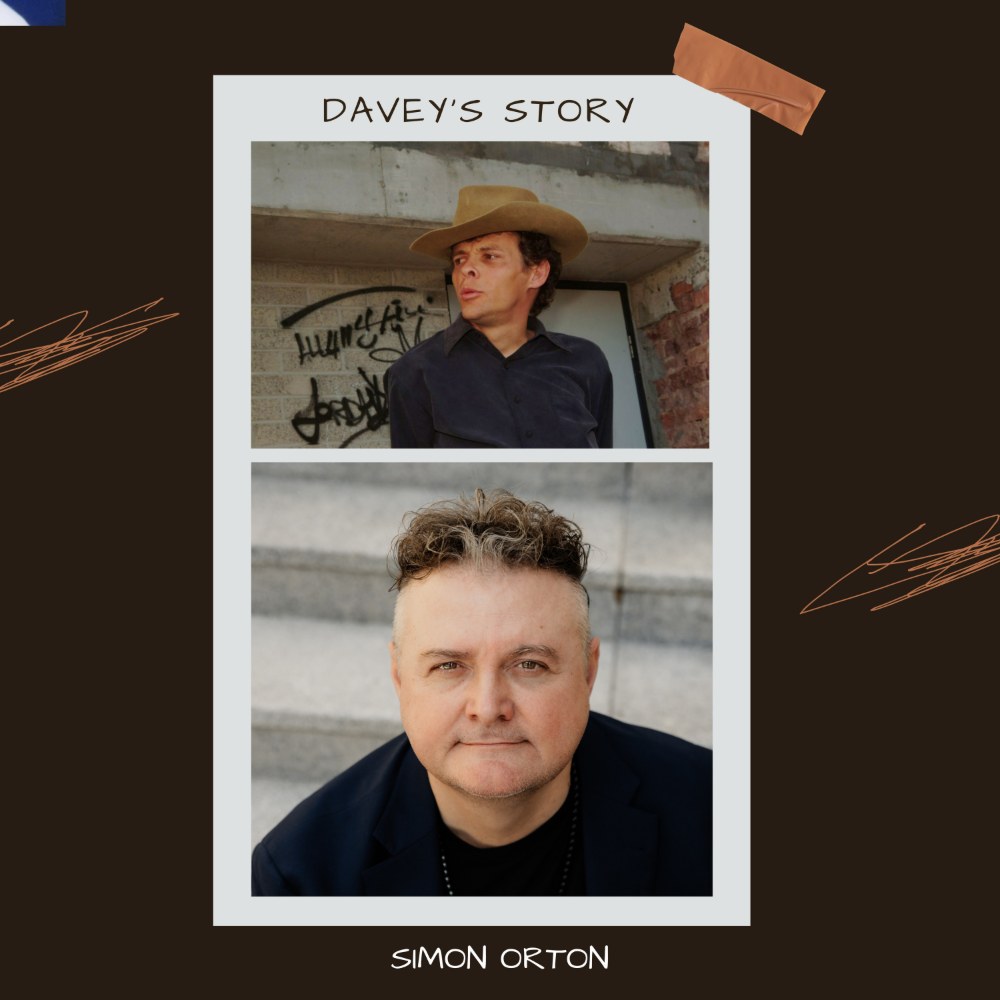
Musically, the listener can pick up on the lullaby origins of the song. Layered beneath the soft country tones, the DNA of the tune remains. It helps distinguish the song from other tributes and further impresses on the listener the personal nature of the tune to Orton. Lyrically, the song feels more in line with its counterparts. Poetic expressions of grief and lasting memory swirl around the actual lullaby Orton wrote for his brother: "Davey, it's time to nod your head/Close your eyes/The day has fled." The double meaning that line takes on in light of death is enough to pull at anyone's heart strings.
The personal nature of "Davey's Song" might limit its reach for some people. After all, not everyone is in the exact same circumstances. But that shouldn't be used as an excuse to skip this track. Simon Orton's lullaby-turned-tribute song is competently written and executed. It at once fits in with other songs of grief, while also containing enough to help it stand out. Despite its particular background, anyone grieving the loss of a relative or friend can take comfort in the soothing tones of Orton's latest single.
Record Label: None


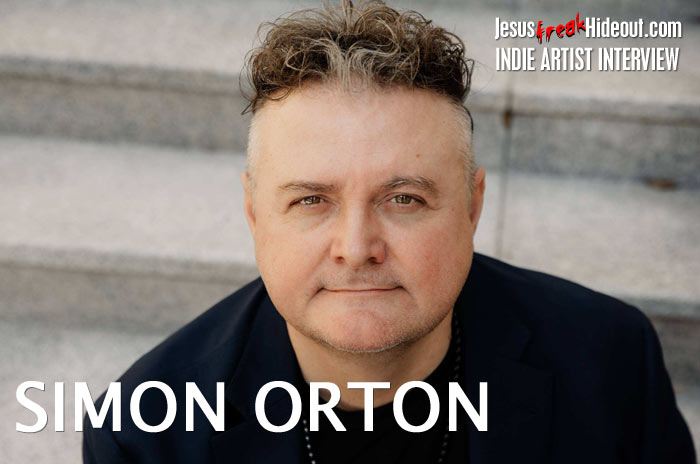
Simon Orton: Music has been part of my life for a long time, but for most of that time it sat alongside my professional career rather than being the career itself. I’ve played guitar for decades, including more than 20 years playing worship music in church, and over time, I moved more seriously into songwriting and recording. I’m a mechanical engineer and safety and risk consultant by profession, so music has always been the creative side of my life. Over the last couple of years, I’ve started releasing original material and a few reinterpretations of songs I love. Quite unexpectedly, some of those releases have found audiences in Australia, the US, the UK and elsewhere, including several independent chart successes. I’m certainly not trying to pretend I’m the greatest guitarist or singer in the world. For me, the song and the story come first. If something I write helps somebody through grief, trauma, loneliness or a difficult season, then the music has done what I wanted it to do.
Simon: Country music actually has a very strong history in Australia, and I think Australians naturally connect with storytelling songs. We have our own country tradition, but American country, folk, gospel and roots music have obviously had a huge influence here as well. What draws me to country is the honesty. At its best, country music isn't frightened of talking about family, faith, heartbreak, loss, love, mistakes and starting again. Those are universal experiences. My own songs tend to start with a real story rather than with the idea of writing something commercially fashionable. Country gives me room to do that. I love acoustic guitars, mandolin, simple melodies and arrangements where you can still hear the words and feel the person behind them. I also think Australians and Americans have more in common musically than people sometimes realize. We both have huge distances, regional communities, working-class traditions and generations of people who have told stories through music.
Simon: It is probably the most personal song I’ve released. Davey was my brother. He lived with severe cerebral palsy and couldn't communicate verbally in the way most of us take for granted, but that never meant he couldn't communicate. You learned to understand his expressions, his eyes, his reactions and the little ways he showed happiness, frustration and love. After Davey died, our family went through a very difficult grieving process. There were questions surrounding his final period of care, and for me there was also a journey through anger, grief, forgiveness and eventually acceptance. The song originally wasn't something I expected to release publicly. It was really something deeply personal for our family. Eventually, I felt that perhaps Davey's story could help another family caring for somebody with a disability, or someone grieving a brother, sister, child or loved one. That has probably been the most moving part of the release. Cerebral palsy organizations in Australia have shared the story with thousands of families and are supporting it around World Cerebral Palsy Day. The song has also travelled much further than I expected through radio and Christian and independent charts overseas. What began as a family story has become something other families are finding their own meaning in, and I'm very grateful for that.
Simon: The emotional foundation of the lullaby is still very much there. I wanted to preserve that sense of tenderness and simplicity because that's where the song began. But “Davey’s Story” became something larger as I worked on it. I added lyrics and sections that allowed me to tell more of Davey's life, what he meant to our family, the people who cared for him, and some of what happens emotionally when somebody you love is gone. The challenge was not to overproduce it. With a song like this, every additional instrument or lyric has to earn its place. I wanted it to still feel as though somebody could sit beside a bed with an acoustic guitar and sing it quietly. So the finished recording has grown considerably from its beginnings, but emotionally, I think the original lullaby is still sitting right at the center of it.
Simon: My professional work is actually broader safety, risk, engineering and organizational assurance, particularly in mining, government, and heavy industry. Increasingly, that has also included psychosocial safety — understanding that a genuinely safe workplace has to consider psychological and emotional wellbeing as well as physical hazards. I don't think I consciously chose that career because of Davey, but looking back, growing up with him definitely shaped the person who entered it. Having a brother with a significant disability teaches you very early that everybody has value, even when they communicate differently or need help other people don't need. You also become aware of carers, families and people who can easily be overlooked by systems. Engineering and risk management can become very technical — procedures, standards, legislation, audits and statistics — but behind every incident number is a human being and usually a family. Davey probably helped teach me that long before I had any professional terminology for it. That same idea now connects my two worlds. In my consulting work, I'm trying to help organizations protect people and make better decisions. In music, I'm trying, in a different way, to help people process some of the things life throws at them.
Simon: Yes, I'd love to eventually put together a full album, although I'm deliberately not rushing it. At the moment, I enjoy releasing songs individually because each one has its own story and purpose. Some are quite serious, some deal with faith, grief or starting again, and others are simply fun country songs or interpretations of music I've always loved. I'm also still learning enormously with every recording — writing, arranging, vocals, production and figuring out what actually connects with listeners. When there are enough songs that genuinely belong together, rather than simply enough songs to fill an album, that's probably when I'll make one. I'd rather release ten songs that mean something than manufacture an album because somebody says an artist is supposed to have one.
Simon: The simplest thing is just to listen and, if a song means something to you, share it with somebody else. Streaming, following my artist pages, adding a song to a personal playlist, requesting it from a radio station or sending it to somebody who might connect with the story all make a difference for an independent artist. With “Davey’s Story” in particular, I'd love people to share it with families living with disability, carers or anyone working through grief. That's much more meaningful to me than simply chasing a streaming number. I'm incredibly grateful when somebody spends three or four minutes of their life listening to something I've written. Nobody owes an artist an audience, so I don't take that for granted.
Simon: Definitely the dingo. I'm an Australian, so I know enough about kangaroos not to box one! A big roo has powerful legs, enormous feet and claws, and absolutely no respect for Queensberry Rules. I'm fairly confident the boxing match would end with the kangaroo remaining undefeated and me explaining a very embarrassing workplace injury to my own safety clients. That said, wrestling a dingo isn't exactly appearing on my bucket list either. Perhaps I'll stick to guitar. It's statistically safer.



 Matthew West Extends the Jesus Is King Tour into Spring with 18 New Dates Matthew West Extends the Jesus Is King Tour into Spring with 18 New DatesMon, 05 Oct 2026 17:11:47 EST |
| Jamie MacDonald to Make Headline Debut at Nashville's Ryman Auditorium on May 23 Mon, 05 Oct 2026 16:44:38 EST |
| Matt Maher Earns #1s on Five Separate Airplay Charts with "Gonna Be Alright" Mon, 05 Oct 2026 13:06:53 EST |
| Kaleb Carson Steps into the Spotlight with Solo Debut "I Know a Name" Fri, 02 Oct 2026 15:53:53 EST |
| Progressive Metal/Punk Band Unteachers to Release "Under Bright Sadness" Oct. 16 Fri, 02 Oct 2026 15:52:53 EST |
| Ennis Worship Pastor Brandon Hixson Wins Second Consecutive Josie Music Award Fri, 02 Oct 2026 15:44:03 EST |
| Lakewood Music Releases "House of Worship (Deluxe)" Fri, 02 Oct 2026 15:38:57 EST |
Click here for All News Headlines |  RSS
RSS







 Record Label: None

 Poor Old Lu A Picture of the Eighth Wonder (Remastered) (independent)